
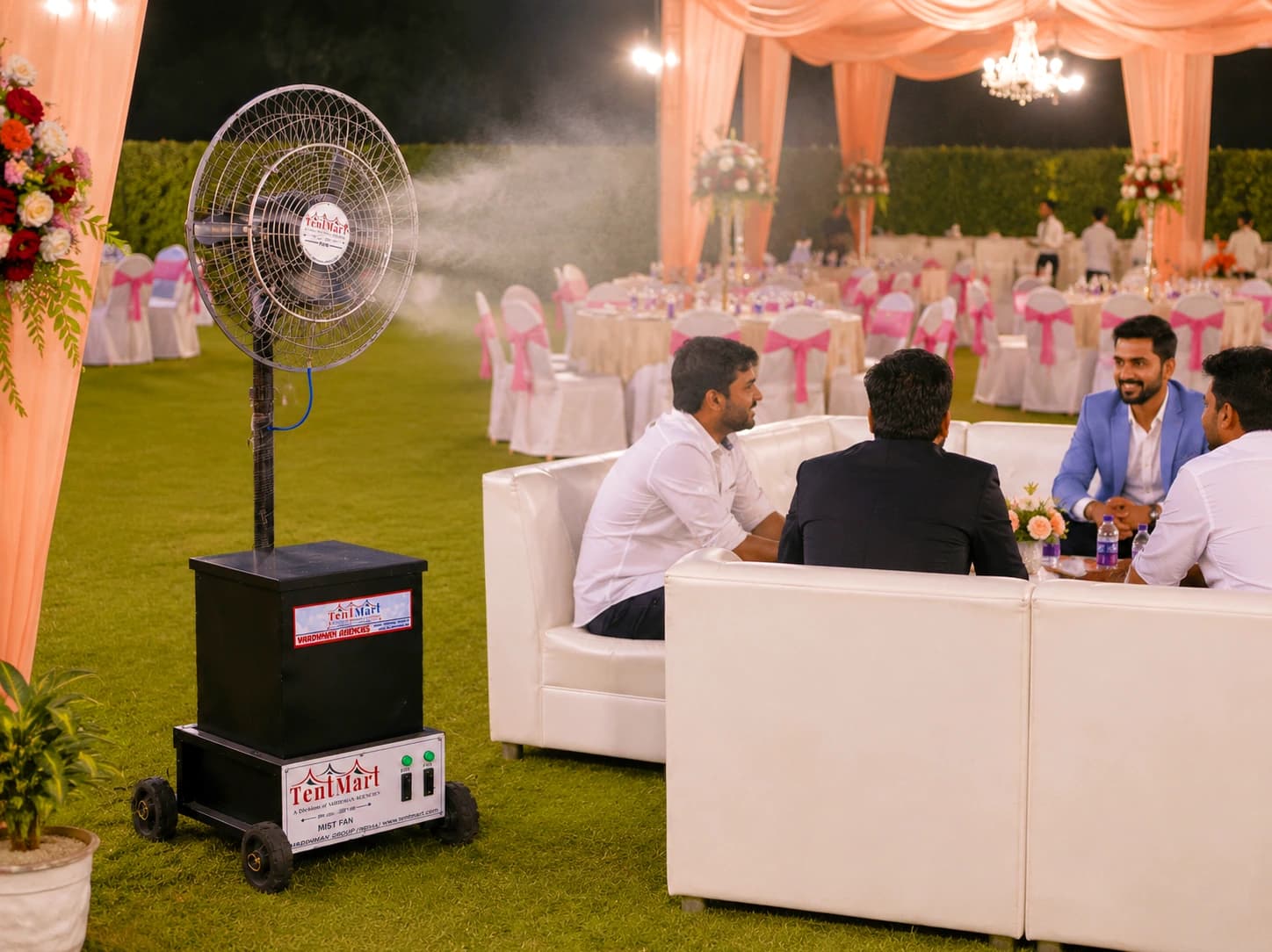
Mist Fan
Cooler bada hai aur jagah chhoti hai, mist fan har jagah fit ho jaata hai.
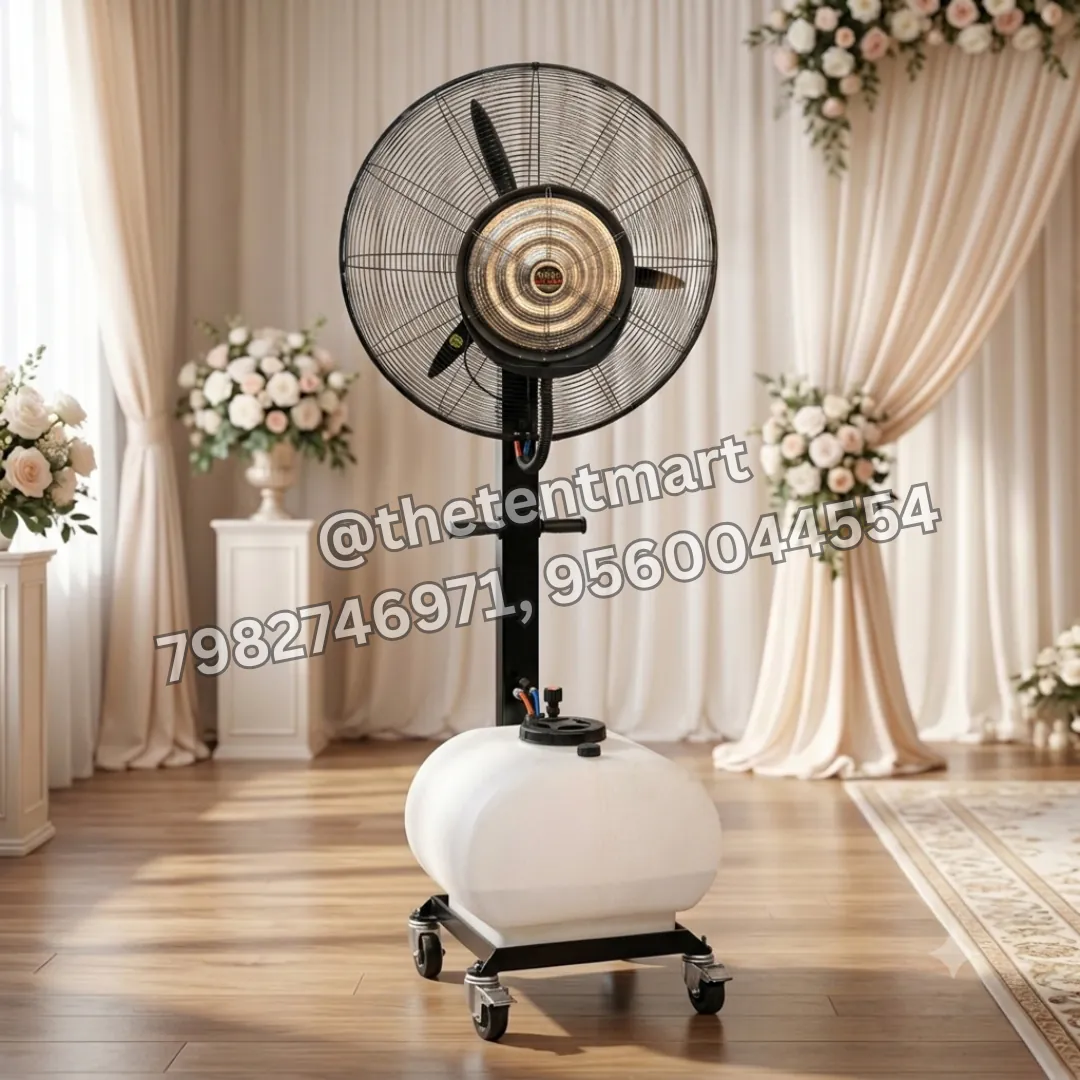
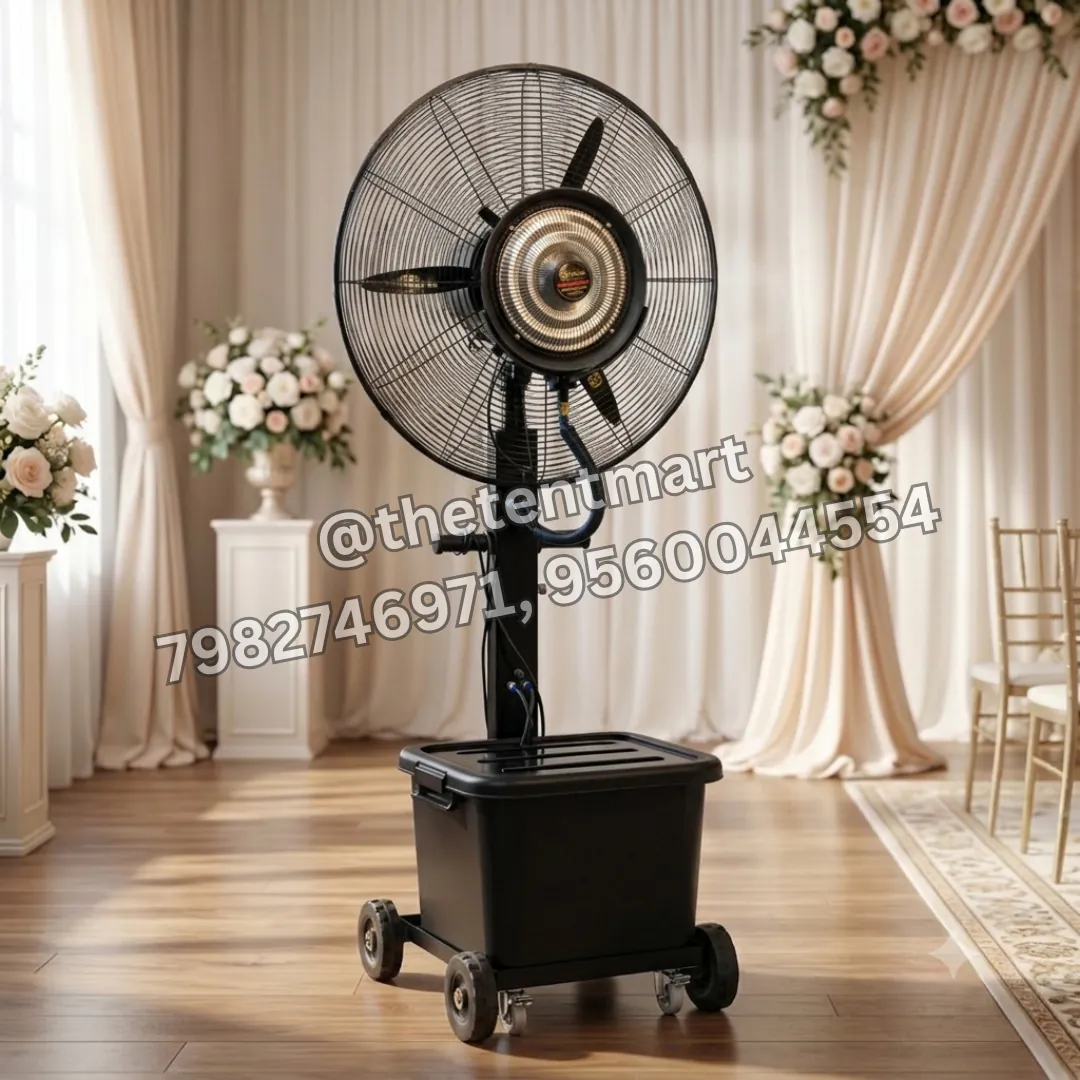
Misting fans for the tight spots a full cooler can't reach: entry points, registration counters, rooftop cafes, and garden corners.
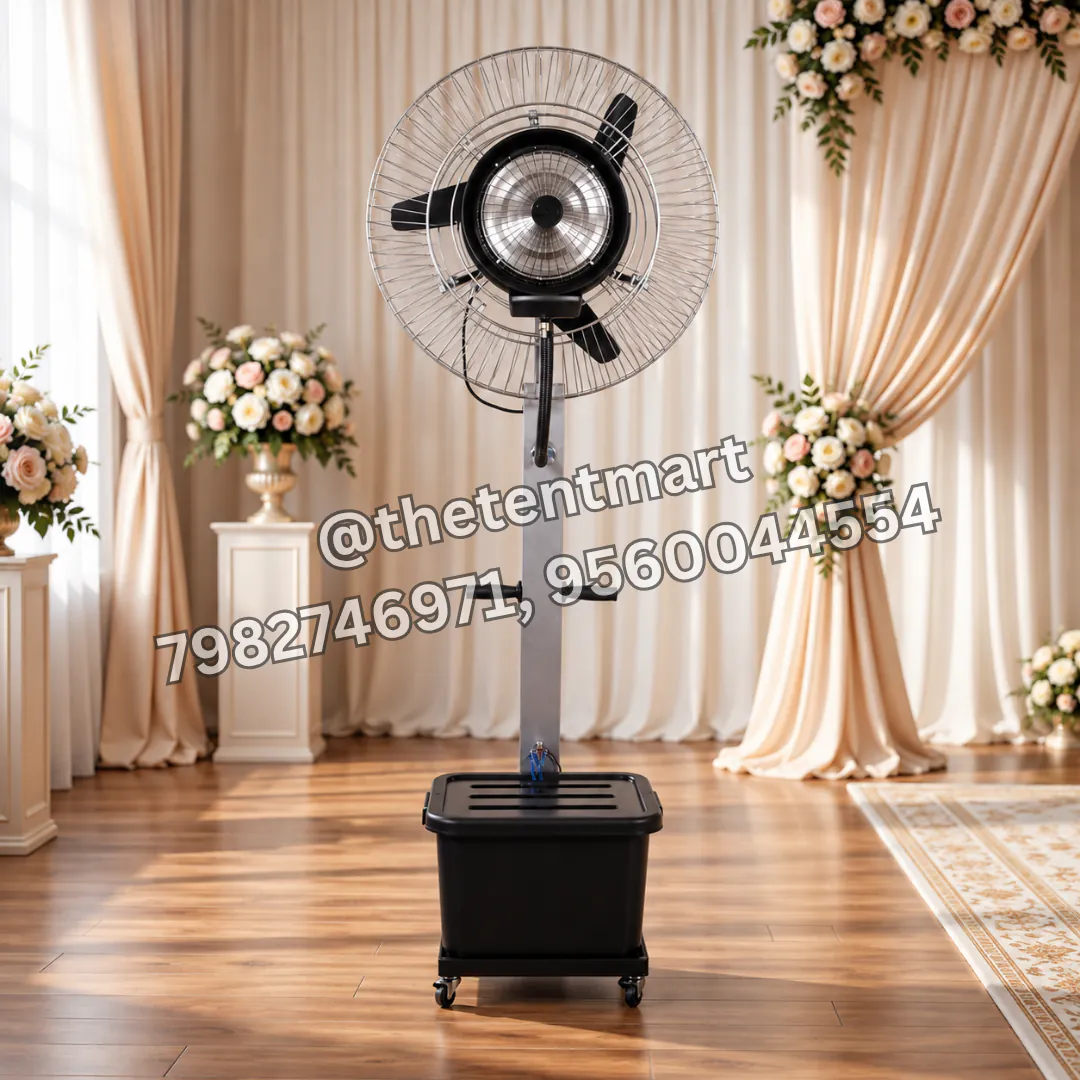
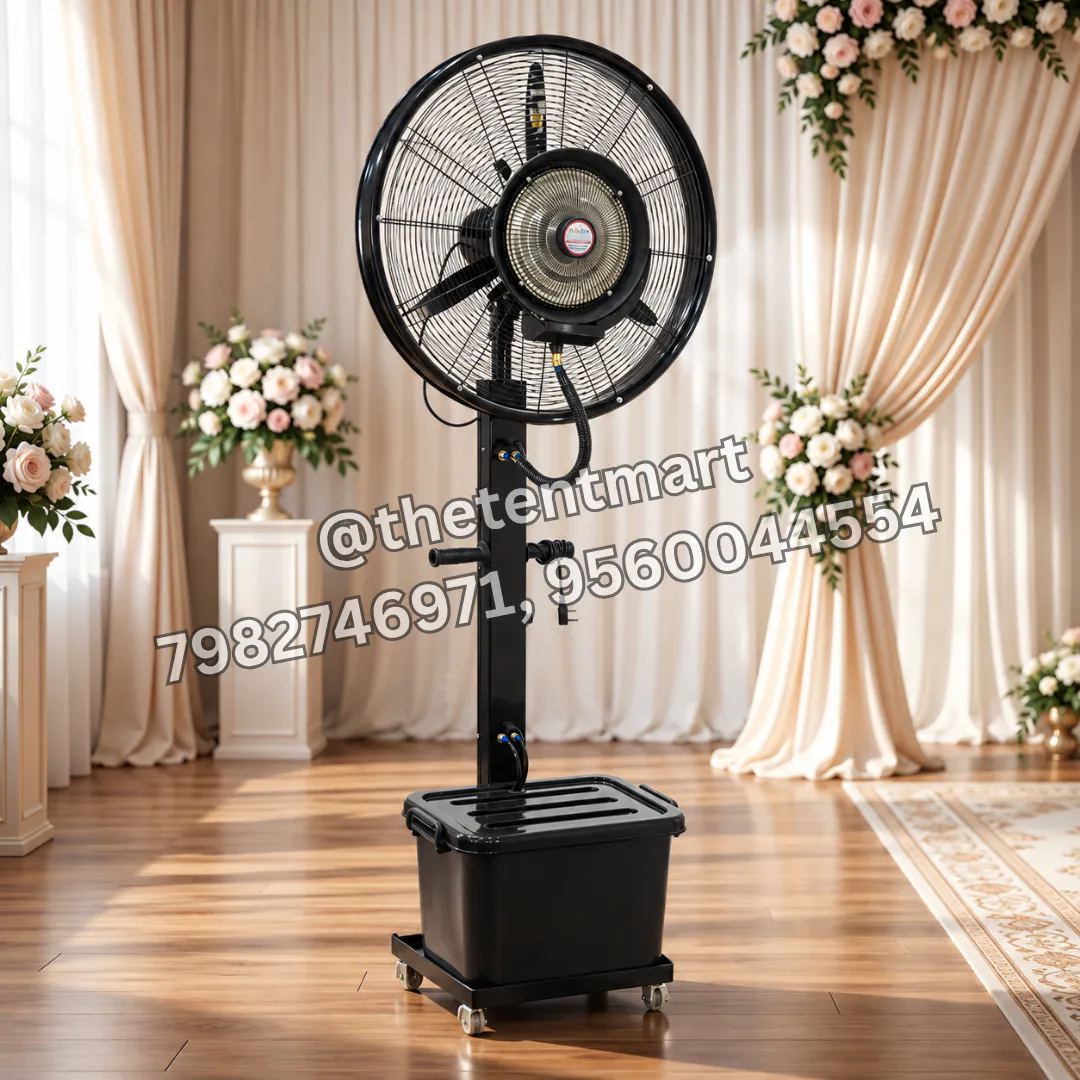
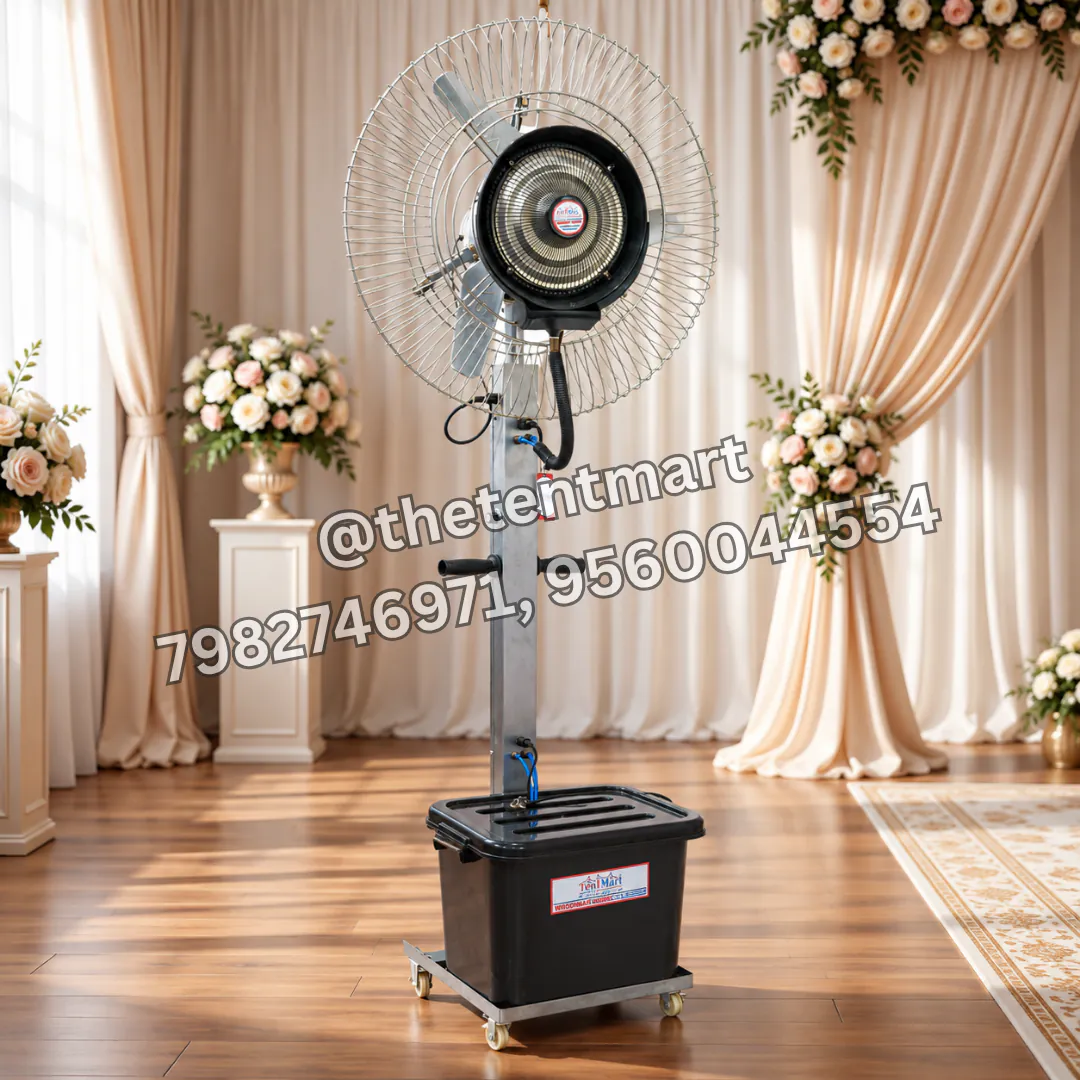
You May Also Need
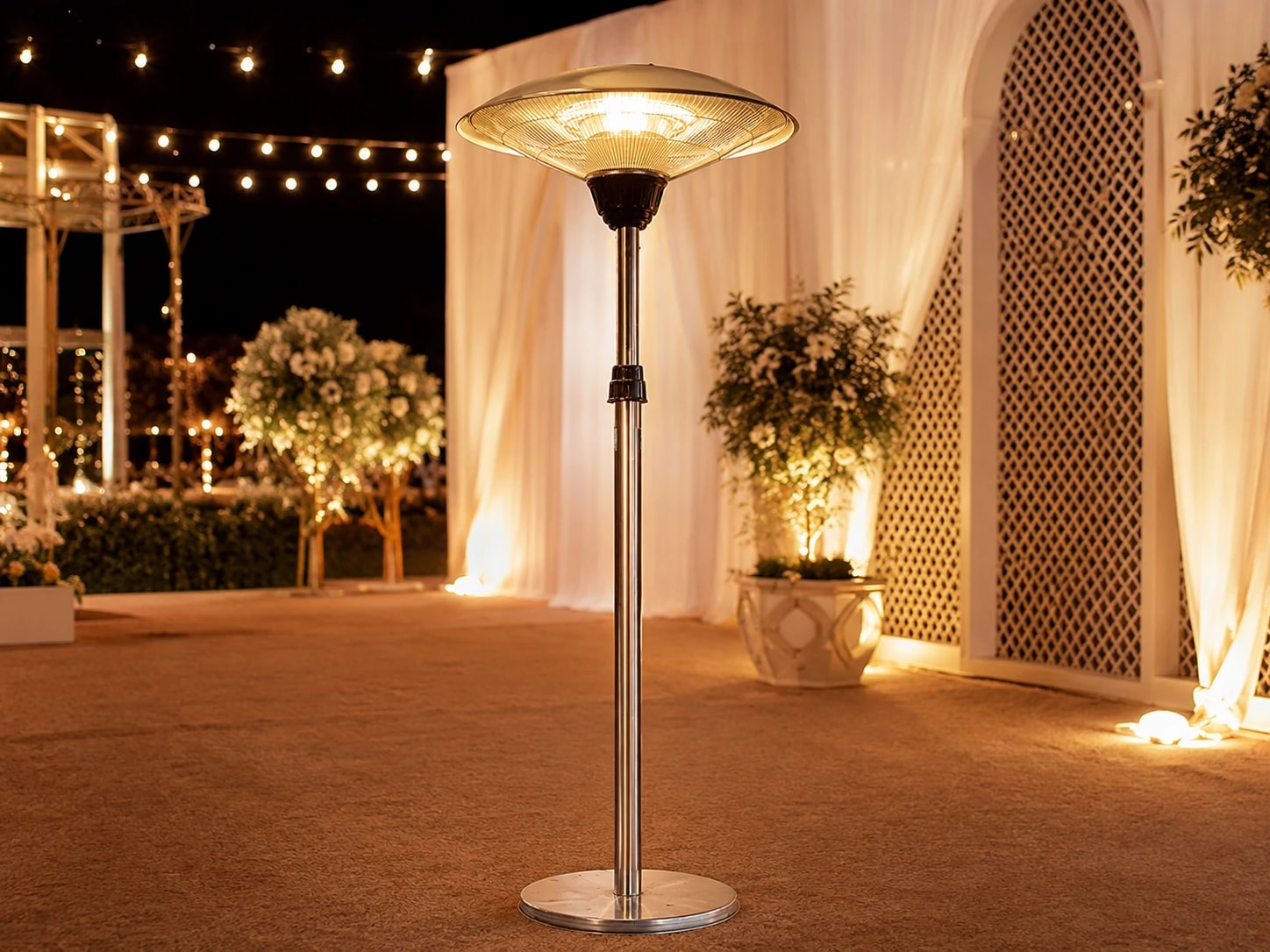
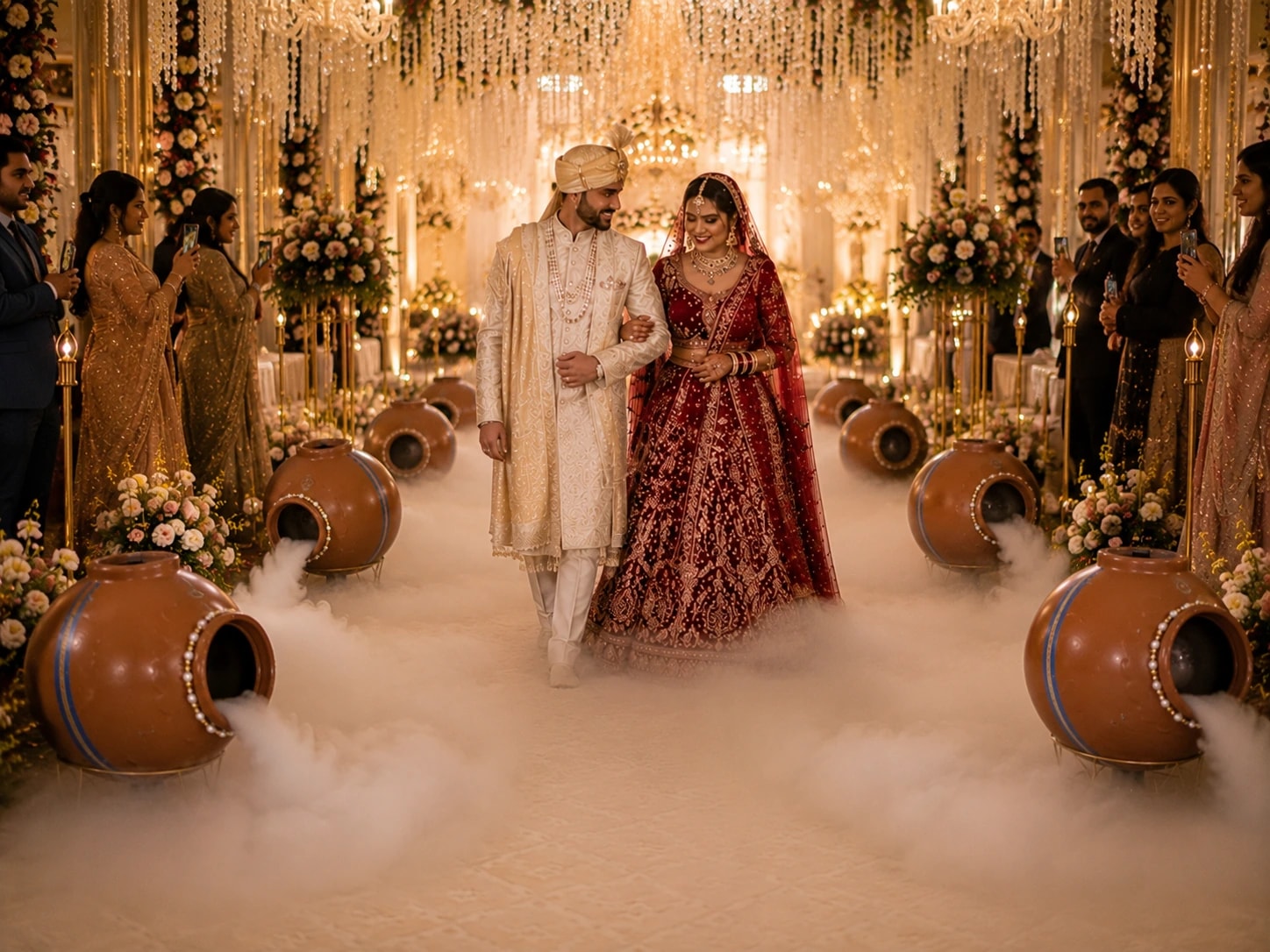
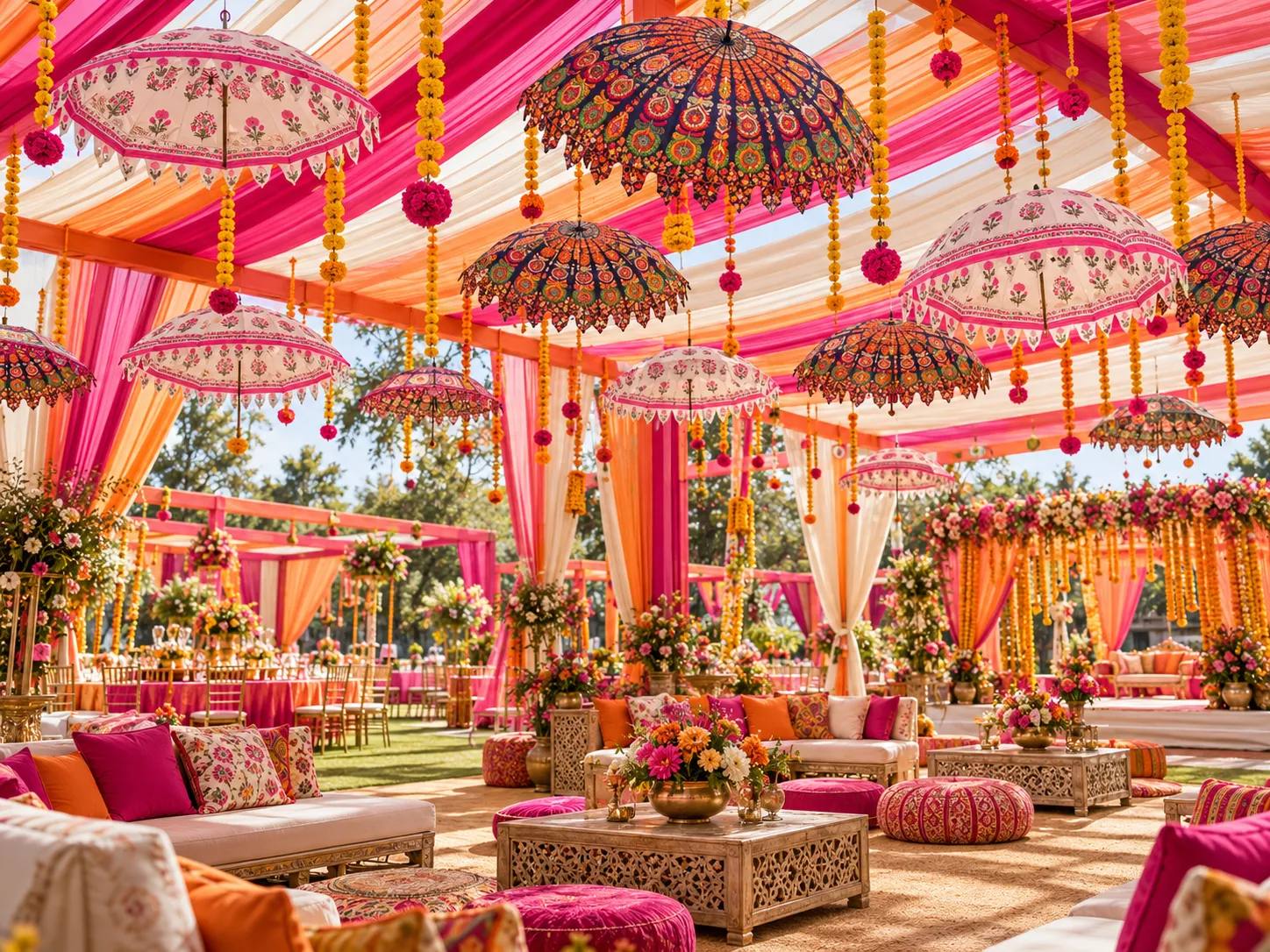
Where misting fans are used
Misting fans work best in semi-open and outdoor spaces where you need targeted mist cooling without the footprint of a full cooler. Tent houses use outdoor misting fans at entry points, registration zones, and smaller seating areas within a larger pandal setup. Banquet halls place cool mist fans in outdoor extensions, smoking zones, and pre-function areas where the main AC does not reach. Decorators add misting fans to their summer hire inventory as a complement to tent coolers: one or two units in the right spots across a large event setup make a noticeable difference to guest comfort. Rooftop and open cafes that cannot fit a large cooler use mist cooling fans as their primary solution for the seating area, and the wheeled base with stopper makes repositioning quick: move it where it is needed, lock it in place, done.
Who buys misting fans
Decorators and event suppliers are the primary buyers, since a misting fan is a natural add-on to any summer event package. Tent house owners buy outdoor misting fans to cover the areas that tent coolers do not reach. Banquet hall owners use cool mist fans for outdoor and overflow spaces. Rooftop cafes and open cafes with limited floor space buy misting fans as permanent outdoor equipment, since they do not have room for a cooler but guests still need a mist cooling system through summer. Resellers supplying event businesses in Tier 2 and Tier 3 cities stock misting fans ahead of the season alongside tent coolers.
What to check before buying misting fans
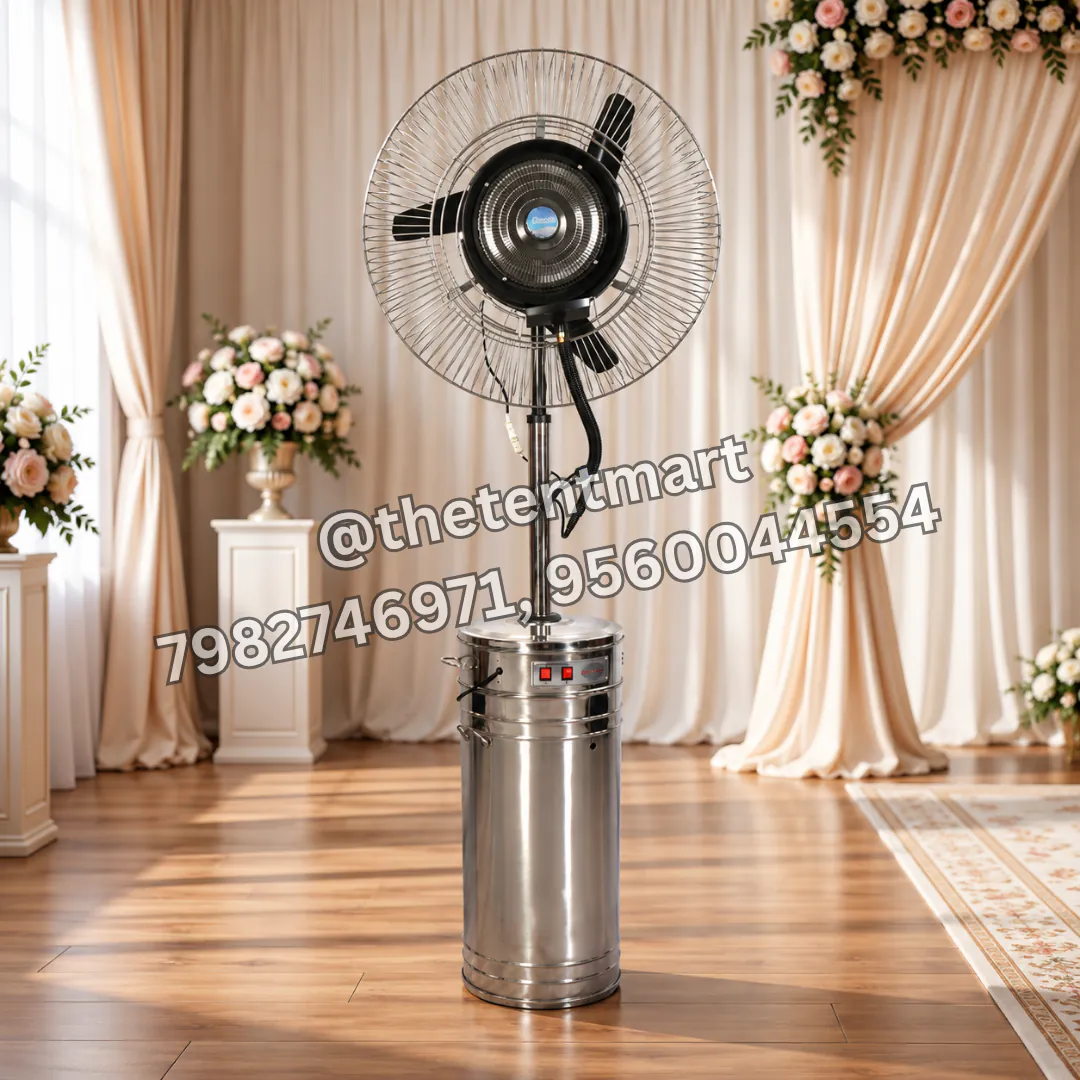
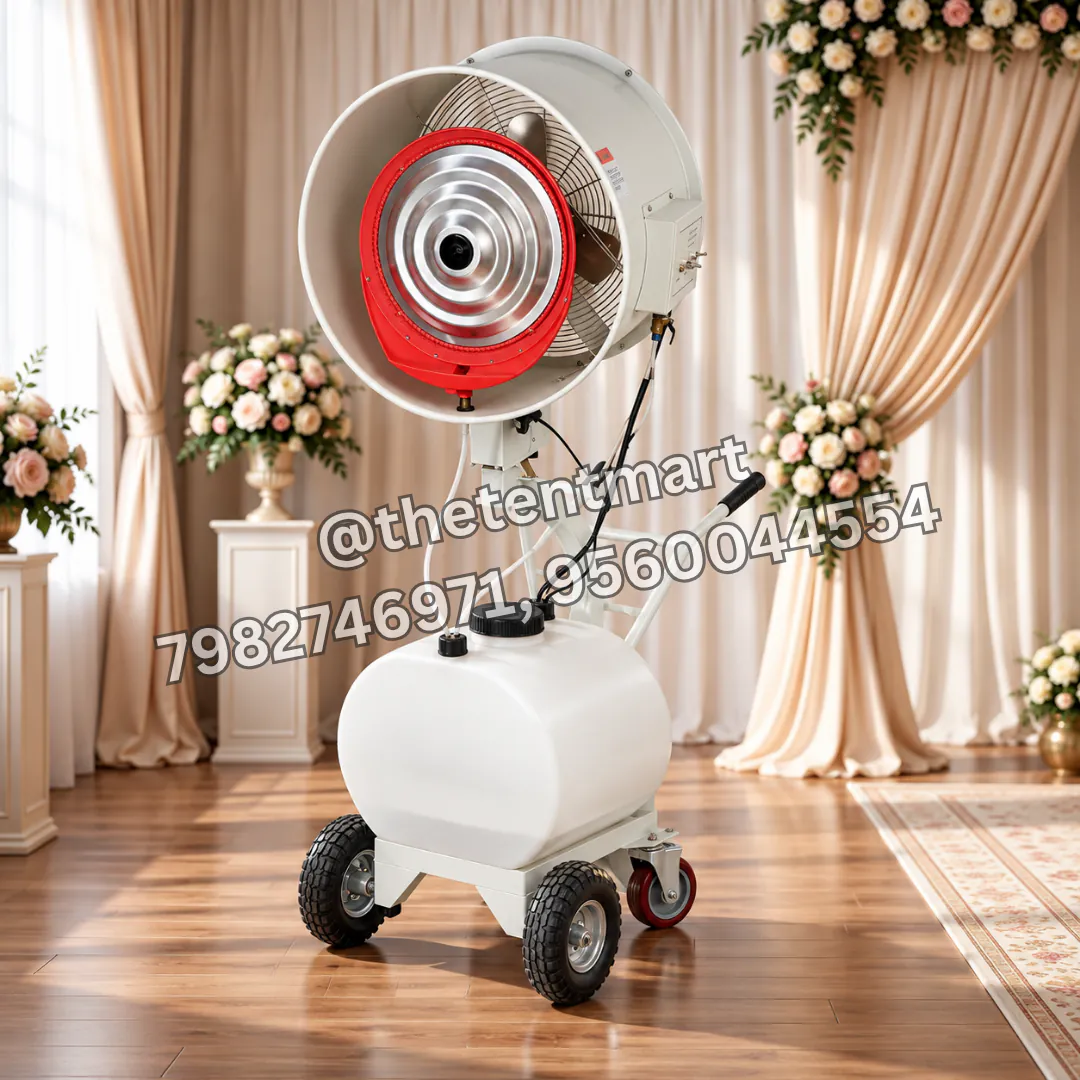
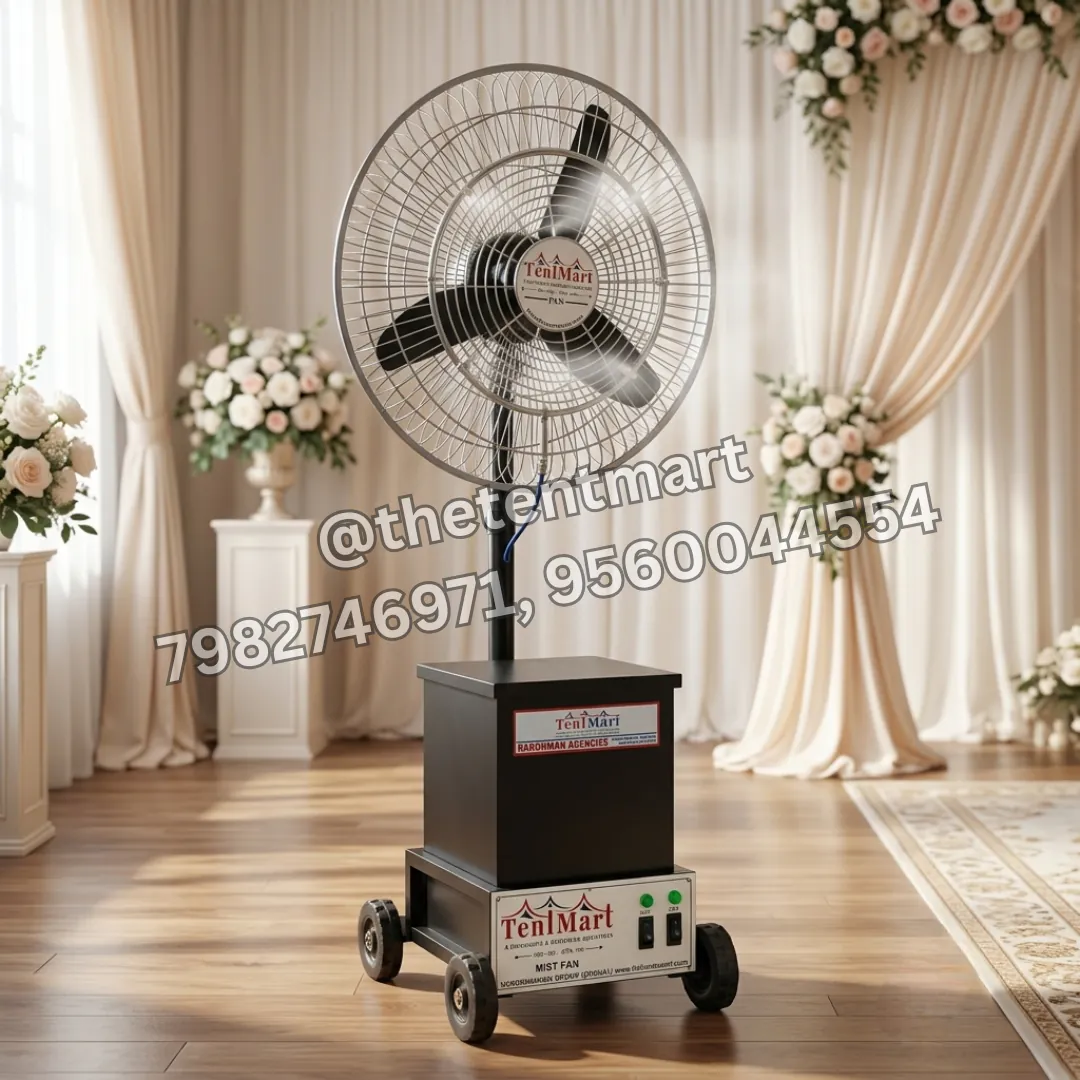
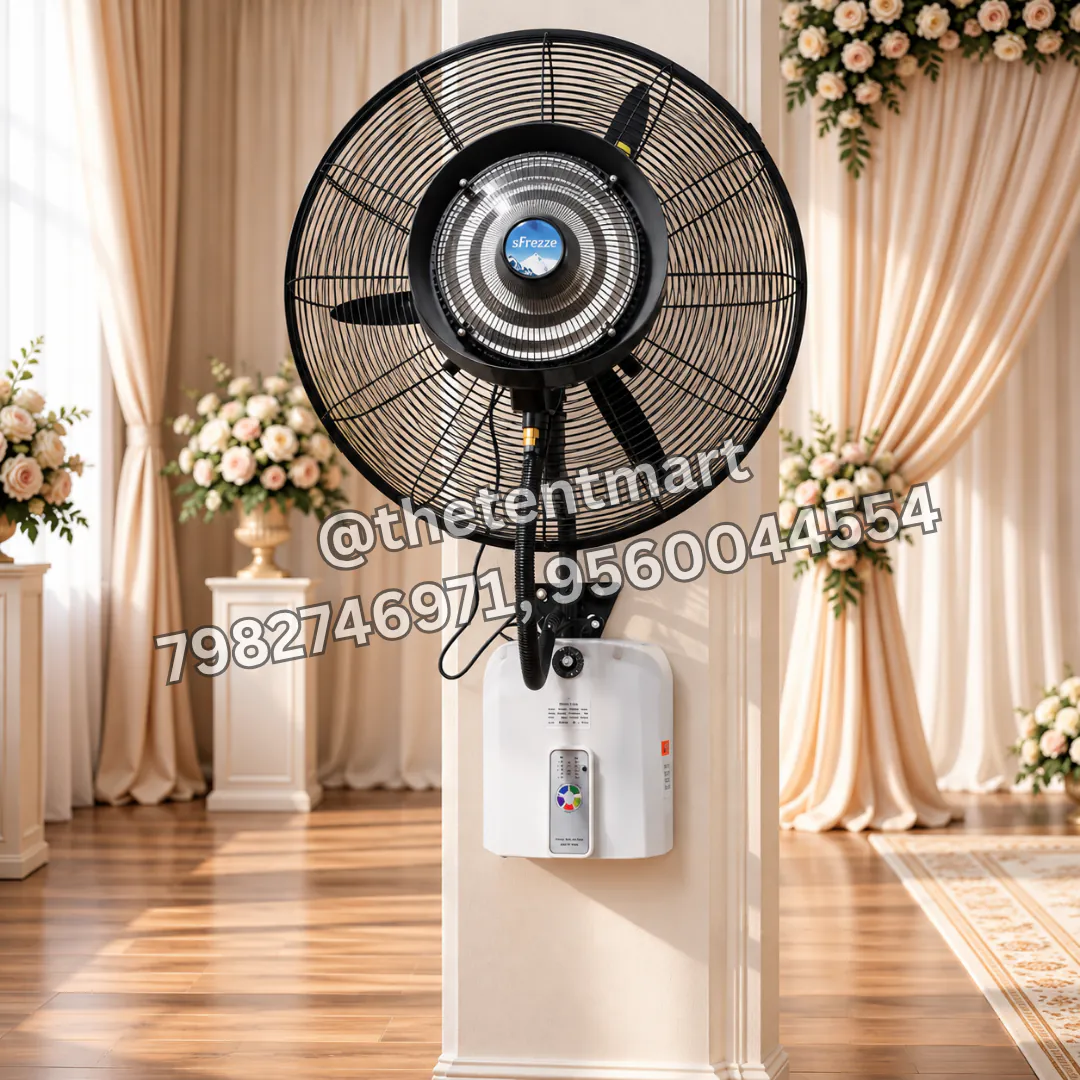
Tank material and capacity. Three options are available: plastic, iron, and stainless steel. Plastic holds 55 to 60 litres and is the most affordable, iron holds around 70 litres, and stainless steel holds 80 litres, does not rust, and is the most durable for outdoor and long-term use. For regular outdoor event use, stainless steel is the right investment; for occasional or indoor use, plastic or iron works fine.
Misting system, nozzle or dish. Two types are available. A nozzle system sprays a fine, targeted mist through small nozzles, better for wider coverage across a larger area. A dish system disperses mist through a spinning dish, creating a broader, more immediate spray around the unit. Both cool effectively; the choice depends on the space and the effect you want.
Rotation. All units come with 180 degree auto rotation, so the fan spreads cool misted air across a wider area without anyone managing it. You can also lock it in a fixed direction if needed.
Controls. The fan system and mist cooling system have separate buttons, so you can run the fan only, the mist only, or both together depending on the temperature and the setting. Useful for transitional weather where full misting is too much but air circulation is still needed.
Model, Indian or imported. Some models in our range are manufactured in India, others are imported, and both are available. The key difference is in build finish, pricing, and specific feature sets, so call or WhatsApp us to discuss which model suits your budget and use case before ordering.
Why event businesses buy misting fans from Tent Mart
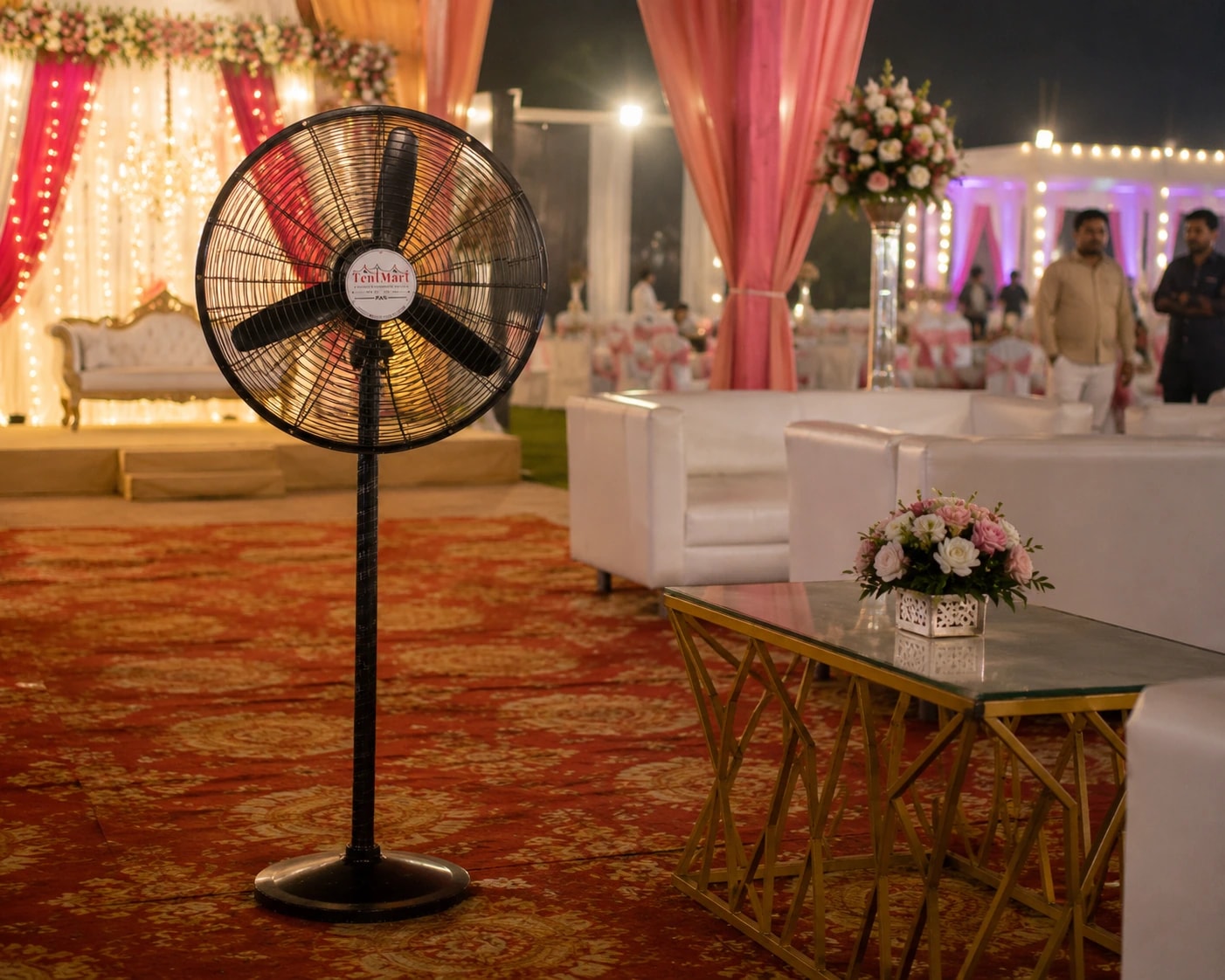
Tent Mart has supplied misting fans and outdoor misting fans to event businesses across India since 1986. We stock Indian and imported models and supply directly, so there is no middleman markup, and no minimum order. Ready stock is dispatched from our Delhi warehouse within 2 to 3 days, with delivery depending on your pin code via third party transport. Combine misting fans with tent coolers and a pedestal fan in one order and save on freight.
Frequently Asked Questions
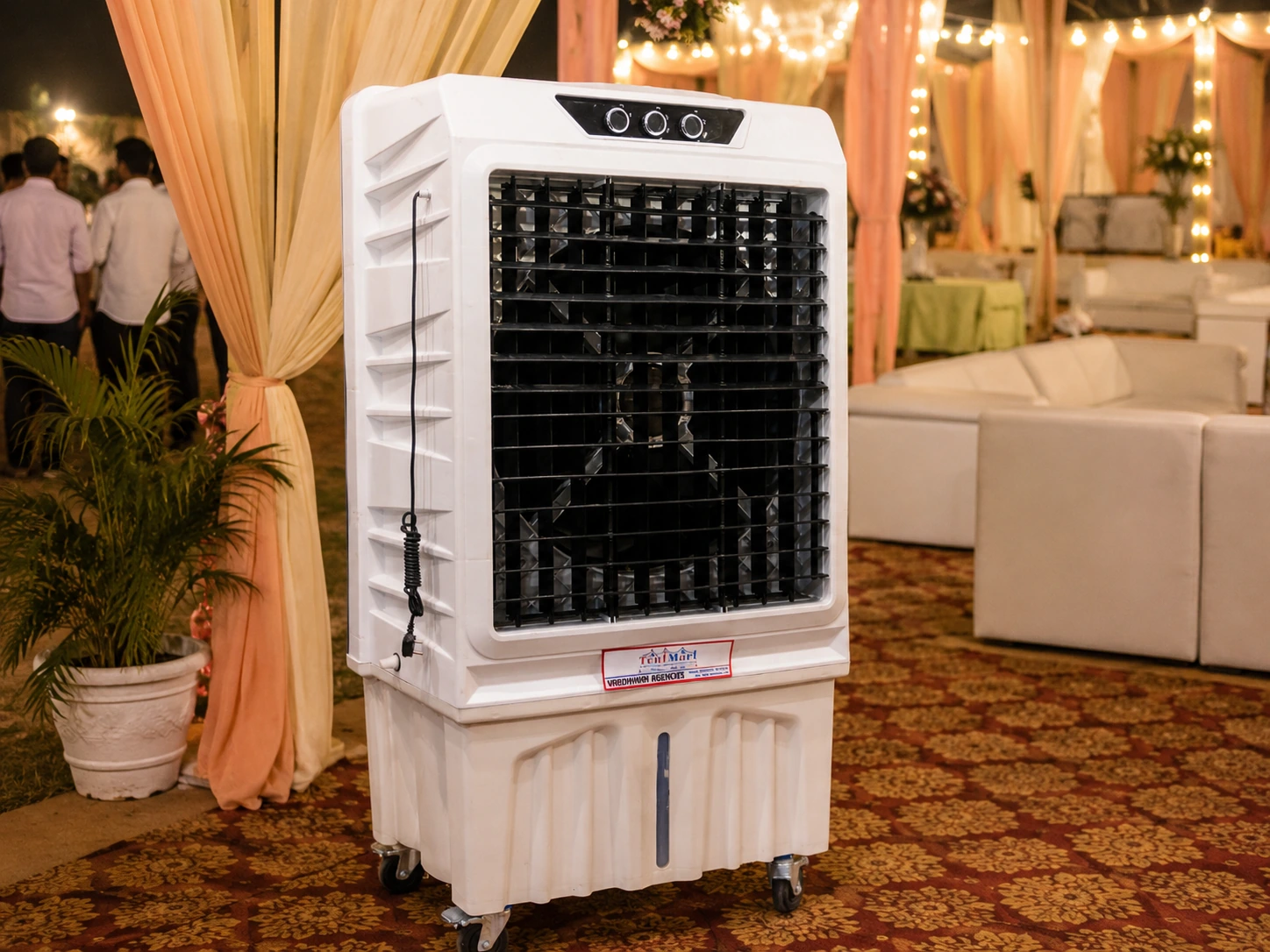
A tent cooler is built for large open pandals: high capacity, strong air throw, large water tank. A misting fan provides targeted mist cooling for smaller spaces, entry zones, and outdoor areas where a full cooler does not fit or is not needed. They are not interchangeable; most event businesses use both depending on the space and the setup.